
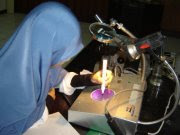
Gerbang Kandang Ratmawati Malaka Ketika kamu melangkah di gerbang senja Tiupan angin debu berderai dari atap kandang tua Bau laboratorium membawa harapan masa silam Saat kuingat desau cita tak ingin cinta tak terbalas Kamu melangkah meniti tangga tak bertepi Ingin meraih masa depan indah kemilau Bertatahkan permadani istana surga harapan Kuingin kamu berguna penentu gizi masa depan Tamalanrea, Agustus 2007 Buat Kawanku Ratmawati malaka Kawanku ………… Senja semakin dekat Mentari kian tenggelam Aku harus meninggalkanmu Meskipun aku adalah harapan Kawanku ………… Kini kau hanya segelintir makna Kutinggalkan kau demi masa depan Dia memberi janji padaku, cerah, berbunga, mempesona Dan idealismeku kubuang Kuinjak dalam-dalam Kututupi Lumpur, agar baunya hilang Kawanku ………. Kini kau kutinggalkan Karena Kau tak memberiku harapan Tamalanrea, akhir Juni 2006 Ketika Cinta tak Berlabuh Ratmawati Malaka Pada jalan setapak di atas bukit Kakiku gemetar Menghitung butir cinta berserakan Yang hilang ditengah waktu Dimanakah kamu ? Aku lelah, berdiri ditengah padang tak bertepi Untuk menyimak segala kemungkinan Yang mungkin terlahir darimu Dari kesucian hatimu sekarang Pada hari terakhir, ketika aku harus melangkah Hatiku berderai ditiup angin senja Kita tak jua bersua Cita dan cinta hanya sepotong angan Pada detik terakhir, ketika aku harus pergi Tak ada untaian air mata, genggaman lepas hilang tak berbekas Tak ada lagi gelak canda Untuk melepas kepergianku dengan langkahku yang masih panjang Tersenyumlah ….. masaku yang hilang Biarlah indah semua hari sekitar kita Aku masih tegak seperti dulu Masih kokoh kakiku berdiri Dengan cinta yang tak pernah beku Meski ombak menggeleger, meski hujan dan dingin kian menusuk Meski leleran keringat berdebu kian menebalkan daki Tak pernah kutahu, yang mana hatimu, yang mana tulusmu Karena mungkin disitu kamu bergelut tak bisa pasti Mengitari bunga-bunga harum semerbak Berduri, menusuk tapi membuai langkahmu Benteng Selayar, Mei 1983 Kerinduan pada Kawan Ratmawati Malaka Kawan ……..! Batu itu terasa runcing ketika kuinjak Menusuk pembuluh darah Perih ……….. Menetes-netes membasahi duniaku Kawan ……! Tanah ini terasa gersang ketika kugenggam Panas membakar kulit Perih ………… Menghitamkan pembungkus-pembungkusku Kawan ……! Masih adakah kamu disana ? Beritamu tak lagi terdengar Biasanya dia terbawa semilir angin Pada saat-saat aku merindukannya Kawan ……! Masih adakah aku dalam batinmu Ketika senja dan pagi membawaku pergi Di tengah kecongkakan dunia Menuju dilemma dan fenomena Kawan ……! Bisikanmu sempat mengusikku, membuai Membawaku ke mega melati Sejuk, nyaman, indah Dimanakah itu sekarang ? Kuingin kau tetap disitu Bogor, 9 Oktober 1983 Mungkinkah ? Ratmawati Malaka Hari-hari semakin tua untuk menyimak kisah di antara kita Kamu sering terbawa kabut menuju angkara murka Sedang aku masih terbuai mimpi Di tepi jurang, di tengah padang tandus Kamu terlalu congkak mengakui cintamu Tetap bertahan dalam onak duri dalam bumi bergetar Dan aku tak pernah sadar akan cinta dalam sekam Hatiku tetap bernyanyi menggelepar tak tentu arah Takkala diam bertitahkan makna Tanah kering tanduspun tak memberi arti Tetap langkahku terbuai dalam kelok mentari Munkinkah cita, cinta dan keadilan dapat dirasa Bogor, November 1983 Aku Terlalu Rapuh Ratmawati Malaka Di Sekolah Menengah Atas, dulu Ketika nilai matematikaku minim Aku ingin mengasah otakku pada dinding laboratorium Hatiku menangis menyesali kelalaian diriku sendiri Dan ketika tak satupun kawanku memandangku Kuingin membenamkan kakiku dalam untaian lembayung Membiarkannya tak bergerak Hatiku menjerit penuh misteri Saat Aku Mahasiswa Saat pertama bertemu professor killer, dan menatapku garang Aku hampir putus asa Dan ketika kopinya muncul yang penuh liku Aku merasa hampir musnah Lalu ketika nilai ujianku bersinar layu Aku menangis sepanjang hari, sepanjang malam Dan ketika fisika atom menggegerkan otakku Aku hampir sembunyi di liang lahat Kala surat sobatku tak kunjung datang Kusurah angin berhenti bertiup, sepi merekah Hatiku yang rapuh Kau seperti daun-daun kering yang diterbangkan angin Terinjak orang lalu hancur rata Dirimu hitam kelam, perlu dicuci dengan untaian kalam Ilahi Kuingin kau tegar seperti gunung dan batu cadas Tak terhancurkan oleh renta dunia Bimbang dan ragu tak perlu kau pelihara Singkirkan dan usir saja sejauh-jauhnya Bogor Kota Hujan, Desember 1983 Hari Ini Ratmawati Malaka Hari ini …….. Kulihat orang lalu di depanku Kulihat kaki-kakinya mengintai lewat sandal jepit Matanya nanar menatap hari depan Penuh debu, penuh kabut Hari ini …… Kulihat wajahku beku Menatap gundukan-gundukan sampah berserakan Dan ada kaki yang mengais-ngais sisa diatasnya Hari ini …. Kubertanya Benarkah itu manusia ? Penuh harapan, penuh duka Hari ini … Kulihat wajahku kaku Aku tak bisa berbuat apa-apa Bogor, 8 Januari 1984 Cinta Ratmawati Malaka Cinta kadang begitu afdal Terlalu dini …… dini Menyatakan cinta Itu Dulu …… Lalu Apa Sekarang Aku tak tahu Lalu Apa jadinya Aku tak tahu Bogor, 8 Januari 1984 Ratmawati Malaka, lahir di Kabupaten Selayar 8 Januari 1965. Penulis adalah dosen pada Program Studi Teknologi Hasil Ternak Fakultas Peternakan Universitas Hasanuddin. Sejak SMA senang menulis cerpen, puisi dan esai.


Exopolysacharides Production by Lactobacillus bulgaricus: A Review
Exopolysaccharides
production by Lactobacillus bulgaricus:
A review
ABSTRACT
The
production of exopolysaccharides by Lactobacillus
bulgaricus, chemical composition, structure, synthesis and application are
outlined. Production of EPS by bacteria
is dependent on the temperature and pH of the medium in terms of carbon,
nitrogen, mineral and vitamin content.
Optimal EPS production by L.
bulgaricus were at 30oC.
Most of researches concluded that L.
bulgaricus produced EPS between 130 – 330 mg/l in suitable environment and
medium. Composition of EPS mainly
composed glucose, galactose and rhamnose in variative ratio, but galactose
often dominant comparison in another monosaccharide. Application
of EPS in food can increase the quality of product. On the other hand, the
possibility that this EPS may be involved in antitumor activity and another
pharmaceutical agent need more confirmation.
Keyword: Lactobacillus
bulgaricus, exopolysaccharide
INTRODUCTION
Exopolysaccharides
are produced by great variety of bacteria including lactic acid bacteria (LAB)
(Broatbent et al., 2003). The name exopolysaccharides (EPS) as proposed
by Sutherland (1972) provides a general term for all these forms of bacterial
polysaccharides found outside the cell wall and will be used in this
article.
Microorganism
produce EPS in two distinct forms: ropy EPS or loose slime that is excreted
into surroundings, and capsular EPS that remain adhered to cell surface
creating a discrete covering (Zisu and Shah, 2003). The role of EPS to cell bacteria is not
clearly defined. In the last decade, an
increasing interest was observed in the EPS produced by the good-grade LAB,
such as L. bulgaricus as starter
culture of fermented milk. These polysaccharides play an important role in the
rheology, texture and mouth feel of fermented milk. The objective of this
article is to review the EPS production by L.
bulgaricus.
PRODUCTION
The productions of EPS are found in
many species of both Gram-positive and Gram-negative bacteria and have been the
subject of numerous investigations in varied fields of interest (Schellhass,
1983). Soil scientists have an interest
in EPS doe to the importance of these polysaccharides to soil properties and
the possible role of EPS in the symbiotic relationship between different
species of Rhizobium and legumes. The industrial microbiologist has become
interested in exploiting microbial EPS production due to increasing interest
and need for novel polysaccharides (Malaka, 1997). Utilizing microorganisms to produce EPS may
offer both economic and availability advantage over traditional plant and
marine sources.
Most
mucoid bacteria produce EPS under all cultural conditions, but the growth conditions
must be optimized for maximal production. Lactobacillus
bulgaricus capable of forming 250 mg/l of EPS on milk ultra filtrated,
while as much as 350 mg/l had been found in milk (Cerning, 1990; Grobben et al., 1995).
Production
of EPS is dependent on the temperature and pH of the medium as well as
composition of the medium in terms of carbon and nitrogen source, and mineral
and vitamin contents (Gamar-Nourani et
al., 1998; Grobben et al., 2000). The effect of temperature and pH on EPS
production is highly variable and is dependent on the strain used and the
experimental conditions. Some workers
have found EPS production to be optimal at low temperature (Marshall et al., 1995; van den Berg et al., 1995), while others have shown
EPS production to be favored at much higher temperatures (Grobben et al., 1995; De Vuyst et al., 1998). The optimum pH for EPS production generally
ranges between 5 and 7 (De Vuyst et al.,
1998). Schellhaass (1983) reported that
growth at pH 6.2 and 6.0 resulted in more polysaccharide production with L. bulgaricus RR in skim milk dialysate than growth at pH 5.8
and 5.5. Maintenance of higher pH might result in increased exopolysaccharide
production by increasing the time the culture was in log phase. Higher pH results in a longer stationary
phase, which would decrease peptidoglycan and teichoic acid synthesis and could
result in increased exopolysaccharide production. Malaka and Abustam (2004)
have shown that optimal EPS production for L.
bulgaricus were at 30oC. Shellhaass
and Morris (1985), Malaka and Abustam (2004) indicated that lower incubation
temperature resulted in slower growth rate, which promoted longer logarithmic
and stationary phases. Gassem et al. (1997) reported that when lactose
was hydrolyzed during fermentation, glucose was utilized by the bacteria and
galactose remained in the medium. The composition of the medium (Marshall et al., 1995) and carbon source (Gamar et al., 1997) are shown to increase EPS
production. Grobben et al. (1998) have been shown that EPS production by L. bulgaricus enhanced by
multiple-vitamin omission.
Many
studies showed a decrease in the total EPS amount when incubation times were
increased (Cerning et al., 1992; De
Vuyst et al., 1998; Ganzel and Novel,
1994; Mozzi et al., 1996). The decreased EPS level upon prolonged
fermentation may be due to an enzymatic degradation (Cerning, 1990; De Vuyst et al., 1998) or a change in the
physical parameters of culture (De Vuyst et
al., 1998). Ganzel and Novel (1994)
suggested some reversible DNA rearrangements leading to different cell types
which differ in exopolymer production capabilities. However, the possible relationship between
EPS production and the factors contributing to EPS degradation have not been
investigated yet.
Bouzar
et al. (1995) have shown that pink
colonies of L. bulgaricus produced
the highest amount (130 mg/l), the white colonies produced the lowest (70
mg/l), and the parental strain produced an intermediate amount (110 mg/l) of
EPS. Approximately half of the EPS was
produced during the exponential growth phase; while Malaka and Abustam (2004)
have shown that EPS was produced during the last exponential growth phase go in
the stationary growth phase. Lactobacillus delbrueckii ssp. bulgaricus RR can be grown in protein-hydrolyzed
whey and produce EPS (between 313-330 mg/l), although the bacteria is typically
weakly proteolitic and grows poorly in un supplemented media (Briczinski and
Roberts, 2002). The level of EPS
production obtained by Toba et al.
(1992) through fermentation of skim milk by L.
delbrueckii sups. bulgaricus NCFB
2483 were 150 mg/l, by Cerning et al.
(1986) through fermentation of skim milk with 1% casein by CNRZ 737 were 424
mg/l, and by Kimmel et al. (1998)
through optimizing in semi-defined medium by strain RR were 354 mg/l. Mozzi et
al. (1995) have been shown that L.
bulgaricus was the best EPS producer among the bacteria assayed (Streptococcus thermophilus, Lactobacillus acidophilus), an amount of
121 mg/l being obtained at 37oC after 24 h of fermentation.
Petry
et al. (2000) developed a chemically
defined medium (CDM) containing lactose or glucose as the carbon source that
supports growth and EPS production of two strains of L. delbrueckii subsp.
bulgaricus. The factors found to
affect EPS production in this medium were oxygen, pH, temperature, and medium
constituents, such as urotic acid and the carbon source. EPS production was greatest during the
stationary phase. For strain CNRZ 416
without pH-controlled conditions, 10 g of glucose per liter seemed to be
optimal carbon source concentration for the highest EPS yield. The EPS yield of strain CNRZ 1187 appeared not
to be affected by the sugar concentration of the medium. The EPS yield of the CNRZ strain was 175
mg/l.
COMPOSITION
AND STRUCTURE
The
findings of numerous researches agree in as much as EPS indicate galactose and
glucose to be released after hydrolysis of the polymer (Schellhaass, 1983;
Cerning et al., 1986), but the molar
ratios reported are very different.
Already by Cerning et al.
(1986) investigated the composition of slime secreted by a strain of L. bulgaricus and reported that
galactose was the most frequently encountered monomer within the
polysaccharide, glucose and rhamnose are present in smaller amounts. Gas liquid chromatography confirmed the HPTLC
identification and revealed that the polymer is composed of galactose, glucose
and rhamnose in a molar ratio of approximately 4: 1:1. The polymers produced by the ropy and
non-ropy strains have the same sugar components. The elution volume of the EPS from the CL
Sepharose $B column was almost the same as that of dextran of molecular weight
of 488.000 Da and a single sharp peak was observed indicating that the EPS
consisted of a single polymer.
There exist three important groups
of EPS produced by LAB: (i)α-glucans,
mainly composed of α-1,6-
and α-1,3-linked glucose
residues, namely, dextran produced by Leuconostoc
mesenteroides subsp. Mesenteroides
and L. mesenteroides subsp. Dextranicum and mutants produced by Streptococcus mutants and S. sobrinus; (ii) fructans, mainly
composes of β-2,6-linked
fructose molecules, such as levan produced by S. salivarius; (iii) heteropolysaccharides produced by mesophilic (Lactococcus lactis subsp. Lactis and L. lactis subsp cremoris)
and thermophilic (L. delbrueckii
subsp. bulgaricus, L. helveticus, and S. thermophilus) LAB (Pham et
al., 2000).
The
sugar components of EPS L. bulgaricus
are most frequently galactose, glucose and very often rhamnose (Cerning, 1990);
galactose and small quantities glucose and rhamnose (Grobben et al., 1997). The EPS from strain L. bulgaricus CNRZ 1187 contained galactose and glucose, and that
of strain CNRZ 416 contained galactose, glucose and rhamnose (Petry et al., 2000).
These
heteropolysaccharides are composed of linear and branched repeating units
varying in size from tetra – to heptasaccharides. The final EPS of high molecular mass (1 x 10⁶ – 2 x 10⁶ Da)
is formed by polymerization of several hundred to a few thousands of these
repeating units (Petry et al., 2000). L.
bulgaricus yielded EPS of molecular weight of approximately 500.000, that
contained galactose, glucose, and rhamnose in a molar ratio of approximately
4:4:1 (Cerning et al., 1991); 5 : 1 :
1 with predominantly 1, 4 and 1, 3 linkage patterns (Gruter et al., 1993).
BIOSYNTHESIS
Zourari
et al. (1992) suggested that L. delbrueckii subsp. bulgaricus, lactose uptake takes place via a lactose
permease. Inside the cell, β-galactosidase cleaves lactose to form glucose
and galactose. The latter is exchanged
with lactose via a lactose-galactose antiport system. Malaka and Abustam (2004) reported that
during the early exponential phase of growth of L. delbrueckii subsp. bulgaricus RR, there was no EPS
biosynthesis. Production of EPS started
at the end of exponential phase, but most EPS was produced at the end of growth
and approximately 90% of glucose was consumed in the stationary phase (Petry et al., 2000).
Exocellular
polysaccharides are synthesized in different growth phases and under a variety
of conditions, depending on the organism studied (Cerning, 1990). The process of synthesis involved can be
divided into two principal categories based essentially on the site of
synthesis and the nature of the precursors, i.e. synthesis outside the cell or
at the cell membrane (Sutherland, 1972).
In many cases, research interest in
biosynthesis of bacterial heteropolysaccharides has been driven by the
knowledge that these polymers played an important role in virulence. Thus, EPS biosynthesis is relatively well
defined in Gram-negative pathogenic bacteria such as Escherichia coli, Salmonella,
and Haemophilus influenza. In these gram-negative systems, assembly of
the basic repeating unit occurs at the cytoplasmic membrane and involves
sequential transfer of sugar nucleotide diphospho precursors to an isoprenoid
lipid carrier, undecaprenyl phosphate (Sutherland, 1972). Once the basic repeating unit is assembled,
the lipid-linked intermediates are usually translocated across the membrane and
polymerized outside of the cell. Then,
the EPS may be covalently linked to the cell surface to form a capsule, or
released into the medium as slime (Broadbent et al., 2003).
Functional genetic studies and
homology comparisons of the EPS-related gene products from some species lactic
acid bacteria (maybe included L.
bulgaricus) strongly suggest that cellular mechanisms for EPS synthesis in
these species are similar to Gram-negative systems that require formation of
lipid-linked intermediates (Stingele et
al., 1996; Broadbent et al.,
2001). Work by Stingele et al. (1999) has shown that EPS
biosynthesis in S. thermophilus
involved a lipid carrier, upon which the sugar monomers that comprise the basic
repeating unit are assembled. The
biosynthesis of EPS by L. bulgaricus
has not been reported yet, but maybe similar with S. thermophilus. The first
step is catalyzed by Eps, a galactosyl-1 phosphate transferase that attaches
galactosyl-phosphate to a lipid-phosphate carrier. This reaction is followed by the action of
three other glycosyltransferases, termed EpsG, EpsI, and EpsF, which
sequentially attach N-acetylgalactosamine, glucose, and a branching galactose
moiety to the basic repeating unit.
Unfortunately, very little is known about EPS polymerization, translocation,
or slime formation by L. bulgaricus
or any other Gram-positive bacteria. Amino
acid homologies between enzymes involved in these processes in Gram-negative
and Gram-positive bacteria suggest that they occur via similar mechanism, but
this hypothesis awaits experimental confirmation (Broatbent et al., 2003).
Cellular
EPS biosynthesis is, therefore, an energy-intensive process that involves
enzymes for production of sugar nucleotide precursors, a glycosyl1-1-phosphate
transferase that transfers the first sugar group onto a phosphorylated carrier
lipid, one or more glycosyltransferases that sequentially add new sugar groups
to the growing repeat unit, and additional enzymes that participate in EPS gene
regulation, membrane translocation, and polymerization/ chain length
determination function (Cerning, 1990).
These reactions commonly involve additional proteins with function that
are not unique to this process (Sutherland, 1972).
As
noted previously, the lipid carrier for EPS assembly in Gram-negative bacteria
is undercaprenyl phosphate, and participation of this molecule in EPS synthesis
by LAB may be significant because it is also required for assembly of
peptidoglycan, teichoid acids, and lipoteichoid acids (Cerning, 1990). Specifically, if the cellular concentration
of UDP is limited, then competition for lipid carrier may be a key limiting
factor in EPS biosynthesis. This
hypothesis is supported by the frequent observation that incubation under
conditions that stimulate bacterial growth and division reduce EPS production,
while growth conditions which reduce for new cell wall synthesis (such as
incubation at a suboptimal temperature) tend to enhance EPS production
(Sutherland, 1972; Cerning, 1995; Malaka and Abustam, 2004).
Competition
for sugar nucleotide precursors is another potential limitation to high EPS
yields from EPS-producing LAB (Boels et
al., 2001). Many of the sugar
nucleotide precursors used for EPS occur as intermediates in sugar catabolic
pathways or, like UDP, are needed for the assembly of peptidoglycan and other
glycan-containing cellular polymers (Broadbent et al., 2003). Because low
levels of sugar precursors are limiting factors on EPS yields (unpublished
data), greater understanding of L.
bulgaricus metabolic flux in sugar metabolism may provide new strategies to
enhance EPS production. Several
researchers have demonstrated a correlation between EPS production and
intracellular activities on enzymes from Leloir (Galactose-metabolism) and
glycolytic pathways, but strain to strain variations are also apparent
(Escalante et al., 1998; Levander and
Radstrom, 2001). Although the basis for
these differences is not yet clear, recently in our research (unpublished data)
showed such knowledge can be used to enhance EPS production in L. bulgaricus by metabolic engineering
of central carbon metabolism.
APPLICATION OF EPS
EPS
have a variety of industrial applications, including their use as biothickeners
in foods. EPS produced by LAB contribute
significantly to the structure and viscosity of fermented milk product (Malaka,
1997; Malaka et al., 1996; Malaka et al., 1997; Malaka and Baco, 2000;
Boels et al., 2003). Polysaccharides
may function in foods as viscosifying agents, stabilizers, emulsifiers, gelling
agents, or water binding agents (van den Berg et al., 1995). EPS of
bacteria origin have unique rheological properties because of their capability
of forming very viscous solutions at low concentrations and their pseudoplastic
nature (Yang et al., 1999). The EPS produced by food-grade LAB have been
considered as a new generation of food thickeners to improve the rheological
properties of foods (Robijn, 1996).
Perry et al. (1997) reported
that using EPS starter cultures consisting of specific strains of L. bulgaricus increases moisture
retention and improve the melt of lower-fat mozzarella cheese. Hess et
al. (1997) demonstrated that yoghurt made with EPS-producing strains of L. delbrueckii subsp. bulgaricus were less susceptible to
syneresis, required less force to penetrate the gel, and were more extensible
than yoghurt made with nonropy strain (non EPS-producing strains). The EPS appear to interact with the surface
of bacterial cells and is associated with the protein matrix, affecting the
viscosity and stability of the milk gel (Schellhaass and Morris, 1985).
Furthermore, several reports indicate that
they can confer health benefits on consumers arising from their immunogenic and
cholesterol-lowering properties (Hess et
al., 1997). As well as live bacteria
(probiotics), EPS can improve intestinal balance to promote health; dietary
carbohydrates may function as prebiotics, beneficially affecting the colonic
microflora (Yang et al., 1999).
Oda et al. (1983) reported an antitumor EPS produced by L. helveticus. The slime produced by Bifidobacterium adolescentis had immunomodifying effects on mouse
splennocytes (Gomez et al.,
1988). Kitazawa et al. (1992) showed that the slime-forming Lc. Lactis subsp. cremoris KVS
20 had antitumor activity, and the slime contained strong B-cell dependent
mitogenic substances.
CONCLUSIONS
Production
of EPS by L. bulgaricus is
growth-associated, and it is influenced by medium compositioc, culture
temperature and pH. Variations in carbon
sources in growth medium resulted in different yields of EPS produced by L. bulgaricus, product range from 110
mg/l until 330 mg/l.
The
EPS L. bulgaricus was shown to
consist of linear and branched repeating units varying in size from tetra – to heptasaccharides. The sugar component of the EPS is most
frequently galactose, glucose and very often rhamnose in a molar ratio of
approximately 4:4:1 (Cerning et al., 1991); 5:1:1 with predominantly 1,4 and
1,3 linkage patterns (Gruter et al., 1993).
The
EPS produced by foodgrade LAB, such as L.
bulgaricus have been considered as a new generation of food thickeners to
improve the rheological properties of foods.
On the other hand, the EPS have potentials pharmaceutical prospect as
antitumor activity, or antivirus would be develop more extensive in the future
time.
ACKNOWLEDGEMENT
I am indebted to my husband Prof. Sudirman Baco for his suffort and
reading the manuscript.
REFERENCES
Boels, I.C., R. van Kranenburg,
J. Hugenholtz, M. Kleerebezen, and W.M. de Vos.
2001. Sugar catabolism and its
impact on the biosynthesis and engineering of exopolysaccharide production in
lactic acid bacteria. Int. Dairy. J. 11:
723 – 732.
Boels, I.C., M. Kleerebezen, and
W.M. de Vos. 2003. Engineering of carbon distribution between
glycolisis and sugar nucleotide biosynthesis in Lactococcus lactis. Appl. And Envir. Microbiol. 69 (2): 1129 –
1135. http://aem.asm.org/cgi/content/full/69/2/1129.
3-4-2004.
Bouzar, F., J. Cerning, and M.
Desmazeaud. 1995. Exopolysaccharide production in milk by Lactobacillus delbrueckii ssp. bulgaricus CNRZ 1187 and by two colonial
variants. J. Dairy Sci. 79(2): 205. http://jds.fass.org/cgi/content/abstract/79/2/205.
9/18/2004.
Briczinski, E.P., and R.F.
Roberts. 2002. Production of an exopolysaccharide-containing
whey protein concentrates by fermentation of whey. J. Dairy Sci. 85: 3189 – 3197. Http://jds.fass.org/cgi/content/full/85/12/3189-1/1/2001.
Broadbent, J.R., D.J. McMahon,
C.J. Oberg, and D.L. Welker. 2001. Use of exopolysaccharide-producing cultures
to improve the functionality of low fat cheese.
Int. Dairy J. 11: 433 – 439.
Broadbent, J.R., D.J. Mc.Mahon,
D.L. Welker, C.J. Oberg, and S. Moineau.
3003. Biocemistry, genetics, and
applications of exopolysaccharide production in Streptococcus thermophilus: A
review. J. Dairy Sci. 86: 407 – 423. http://jds.fass.org/cgi/content/full/86/407-9/10/2004.
Cerning, J., C. Bouillanne, M.J.
Desmazeaud, and M. Landon. 1986.
Isolation and characterization of exocellular polysaccharide produced by
Lactobacillus bulgaricus. Biotechnol. Lett. 8(9) : 625 – 628.
Cerning, J. 1990.
Exocellular polysaccharides produced by lactic acid bacteria. FEMS Microbiology Reviews 87: 113 – 130.
Cerning, J., C. Bouillanne, M.
Landon, and M. Desmazeaud. 1991. Isolation and characterization of
exopolysaccharides from slime forming mesophilic lactic acid bacteria. J. Dairy Sci. 75: 692 – 699.
Cerning, J., C. Bouillanne, M.
Landon, and M. Desmazeaud. 1992. Isolation and characterization of
exopolysaccharides from slime forming mesophilic lactic acid bacteria. J. Dairy
Sci. 75: 692 – 699.
Cerning, J. 1995.
Production of exocellular polysaccharide by lactic acid bacteria and
dairy propionibacteria. Lai 75 : 463 –
472.
De Vuyst, L., F. Vanderverken,
S. van de Van, and B. Degeest.
1998. Production by and isolation
of exopolysaccharides from Streptococcus thermophilus grown in a milk medium
and evidence for their growth-associated biosynthesis. J. Appl. Microbiol. 84: 1059 – 1068.
Escalante, A., C.
Wacher-Rodarte, M. Garcia-Garibay, and A. Farres. 1998.
Enzymes involved in carbohydrate metabolism and their role on
exopolysaccharide production in Streptococcus
thermophilus. J. Appl. Microbiol.
84: 108 – 114.
Gamar, L., K. Blondeau, and J.M.
Simonet. 1997. Physiological approach to extracellular
polysaccharide production by Lactobacillus rhamnosus strain C83. J. Appl. Microbiol. 83: 281 – 287.
Gamar-Nourani, L., K. Blondeau,
and J.M. Simonet. 1998. Influence of culture conditions on
exopolysaccharide production by Lactobacillus rhamnosus strain C83. J. Appl. Micribiol. 85(4): 664 – 672. http://www.blackwll-synergy.com/links/doi/10.1111/j.1365-2672.1988.00574.x/full. 12/8/2004.
Gancel, F., and G. Novel. 1994.
Exopolysaccharide production by Streptococcus
salivarius ssp. thermophilus
cultures 1: Conditions of production. J.
Dairy Sci. 77: 685 – 688.
Garcia-Garibay, M., and V.M.E.
Marshall. 1991. Polymer production by Lactobacillus delbrueckii
ssp. bulgaricus. J. Appl. Bacteriol. 70: 325 – 328.
Gassem, M.A., K.A. Scmidt, and
J.F. Frank. 1997. Exopolysaccharide production from whey
lactose by fermentation with Lactobacillus delbrueckii ssp. bulgaricus. J. Food Sci.
62 (1) : 171 – 173.
Gomez, E., M.M. Melgar, G.P.
Silva, A. Portoles, and I. Gil. 1988.
Exocellular products from Bifidobacterium
adolescents as immunomodifiers in the lymphoproliferative responses of
mouse splenocytes. FEMS Microbiol. Lett.
56: 47 – 52.
Grobben, G.J., J. Sikkema, M.R.
Smith, and J.A.M. de Bont. 1995. Production of extracellular polysaccharides
by Lactobacillus delbrueckii subsp. bulgaricus NCFB 2772 with a simplified
defined medium. Appl. And Environt.
Microbiol. 64(4): 1333 – 1337.
Grobben, G.J., W.H.M. van
Csteren, H.A. Schols, .A. Oosterveld, G. Sala, M.R. Smith, J. Sikkema, and
J.A.M. de Bond. 1997. Analysis of the exopolysaccharides produced
by Lactobacillus delbrueckii subsp. bulgaricus NCFB 2772 grown in continous culture
on glucose and fructose. Appl.
Microbiol. Biotechnol. 48: 516 – 521.
Grobben, G.J., I.C. Joe, V.A.
Kitzen, I.C. Boels, F. Boer, J. Sikkema, M.R. Smith, and J.A.M. de Bont. 1998.
Enhancement of exopolysaccharide production by Lactobacillus delbrueckii
subsp. bulgaricus NCFB 2772 with simplified defined medium. Appl and Environment. Microbiol. 64(4):
1333-1337. http://aem.asm.org/cgi/content/full/64/4/1333.5-31-2004.
Grobben, G.J., I.C. Boels, J.
Sikkema, M.R. Smith, and J.A.M. de Bont.
2000. Influence of ions on growth
and production of exopolysaccharides by Lactobacillus
delbrueckii subsp. bulgaricus NCFB
2772. J. Dairy Res. 67: 131 – 135.
Gruter, M., B.R. Leeplang, J.
Kuifer, J.P. Kamerling and J.F.G. Vleigenthart.
1993. Structural characterization
of the exopolysaccharide produced by Lactobacillus
delbrueckii subsp. bulgaricus RR
grown in skimmed milk. Carbohydrate Res
239: 209 – 226.
Hess, S.J., R. F. Roberts, and
G.R. Ziegler. 1997. Rheological properties of nonfat yoghurt
stabilized using Lactobacillus delbrueckii subsp. bulgaricus producing exopolysaccharide or using commercial
stabilizer systems. J. Dairy Sci. 80:
252 – 263.
Kimmel, S.A., R.F. Roberts, and G.R. Ziegler.
1998. Optimization of
exopolysaccharide production by Lactobacillus
delbrueckii supsp. bulgaricus RR
grew in a semidefined medium. Appl.
Environ. Microbiol. 64: 659 – 664.
Kitazawa, H., T. Yamaguchi, and
T. Itoh. 1992. B-cell mitogenic activity of slime produced
from slime-forming encapsulated Lactococcus
lactis ssp. cremoris. J. Dairy Sci. 75: 2946 – 2951.
Levander, F., and P. Radstrom. 2001.
Requirement for phosphoglucomutase in exopolysaccharide biosynthesis in
glucose and lactose-utilizing Streptococcus
thermophilus. Appl. Environ.
Microbiol. 67: 2734 – 2738.
Malaka, R., M. Kuroki, Y.
Kihara, and T. Ohashi. 1996. Physical properties and microstructure of
acid milk curd added curdlan, a polysaccharide from bacteria. The West Japan
J. Anim. Sci. 47: 36 – 37.
Malaka, R. 1997.
Effects of Curdlan, a Bacteria Polysaccharide on the Physical Properties
and Microstructure of Acid Milk Curd by Lactic Acid Fermentation. Master thesis. Faculty of Agriculture, Miyazaki University. Japan.
Malaka, R., S. Baco, and T.
Ohashi. 1997. Effect of curdlan, a bacteria polysaccharide
on the rheological properties and microstructure of acid milk curd. Japanese Society of Zootechnological Sci.
9:36.
Malaka, R., and S. Baco. Rheological properties and microstructure of
acid milk curd by curdlan addition, a polysaccharide from bacteria. Bulletin Ilmu Peternakan dan Perikanan VI(1):
121 – 135.
Malaka, R., and E. Abustam. 2004.
Effect of incubation condition on the growth characteristics and
exopolysaccharide production by ropy Lactobacillus
delbrueckii subsp. bulgaricus. Bulletin Penelitian, Seri Hayati. 7 (2) : 105
– 109.
Marshall, V.M., E.N., Cowie, and R.S. Moretons.
1995. Analysis and production of
two exopolysaccharides from Lactococcus lactis subsp. cremoris LC330. J. Dairy Res. 62: 621-628.
Mozzi, F., G. Oliver, G.S.de
Giori, and G.F. de Valdes. 1995. Influence of temperature on the production of
exopolysaccharides by thermophilic lactic acid bacteria. Michwissensshaft 50 (2): 80 – 82.
Mozzi, F., G.S. de Giori, G.
Oliver, and G.F. de Valdez. 1996. Exopolysaccharide production by Lactobacillus casei in milk under
different growth conditions.
Milchwissenchaft, 51(12): 670 – 673.
Oda, M., H. Hasegawa, S.
Komatsu, M. Kambe, and F. Tsuchiya.
1983. Anti-tumor polysaccharide
from Lactobacillus sp. Agric. Biol. Chem. 47: 1623 – 1625.
Pham, P.L., I.
Dupont, D. Roy,
G. Lapointe, and J. Cerning. 2000. Production of exopolysaccharide by Lactobacillus rhamnosus R and analysis of
its enzymatic degradation during prolonged fermentation. Appl. Environ. Microbiol. 66(6): 2302 –
2310. http://aem.asm.org/cgi/content/full/66/6/2302.
8-25-2003.
Perry, D.B., D.J. McMahon and C.J. Oberg.
1997. Effect of
exopolysaccharide-producing culture on moisture retention in low-fat mozzarella
cheese. J. Dairy Sci. 80: 799-805.
Petry S, S. Furlan, M.J.
Crepeau, J. Cerning, and M. Desmazeaud.
2000. Factors affecting exocellular
polysaccharide production by Lactobacillus
delbrueckii subsp. bulgaricus grown in a chemically defined
medium. Appl. Environ. Microbiol. 66(8):
3427-3431. Http:/www.ncbi.nlm.nih.gov/entrez/guery. fcgi?cmd=Retrieve&db=PubMed&list_uids=10...8/25/2003.
Robijn, G.W. 1996.
Structural studies on exopolysaccharides produced by lactic acid
bacteria. Ph.D. Thesis, Utrecht University. The Netherlands.
Schellhaass, S.M. 1983.
Characterization of exocellular slime production by bacterial starter
cultures used in the manufacture of fermented dairy products. Ph.D. dissertation, Univ. Of Minnesota, St. Paul.
Schellhaass, S.M., and H.A.
Morris. 1985. Rheological and scanning electron microscopic
examination of skim milk gels obtained by fermenting with ropy and non-ropy
strains of lactic acid bacteria. Food
microstruct. 4: 279 – 287.
Stingele, F., J.R. Neeser, and
B. Mollet. 1996. Identification and characterization of the
EPS (exopolysaccharide) gene cluster from Streptococcus
thermophilus Sfi6. J. Bacteriol.
178: 1680 – 1690.
Stingele, F., S.J.F. Vincent,
E.J. Faber, J.W. Newell, J.P. Kamerling, and J.R. Neeser. 1999.
Introduction of the exopolysaccharide gene cluster from Streptococcus thermophilus Sfi6 into Lactococcus lactis MG1363: production
and characterization of an altered polysaccharide. Mol. Microbiol. 32: 1287 – 1295.
Sutherland, I.W. 1972.
Bacterial exopolysaccharides.
Pages 143 – 213 in Advances in Microbial Physiology, Vol. 8. A.H. Rose
and D.W. Tempest, ed. Academic Press, New
York, N.Y.
Toba, T., H. Uemura, and T.
Itoh. 1992. A new method for the quantitative
determination of microbial extracellular polysaccharide production using a
disposable ultrafilter membrane unit.
Lett. Appl. Microbiol. 14: 30 – 32.
Van den Berg, D.J.C., G.W.
Robijn, A.C, Jansen, M.L.F. Giuseppin, R. Vreeker, J.P. Kamerling, J.F.G.
Vliegenthart, A.M, Ledeboer, and C.T. Verrips.
1995. Production of a novel
extracellular polysaccharide by Lactobacillus
sake 0-1 and characterization of the polysaccharide. Appl. Environ. Microbiol. 61:2840 – 2844.
Yang, V.Z., E.
Huttunen, M. Staaf, G. Widmalm, H. Tenhu. 1999.
Separation, purification and characterization of extracellular
polysaccharides produced by slime-forming Lactococcus
lactis ssp. cremoris strains. Int. J. Dairy 9: 631 – 638.
Zisu, B., and N.P. Shah. 2003.
Effect of pH, temperature, supplementation with whey protein
concentrate, and adjunct culture on the production of exopolysaccharide by
Streptococcus thermophilus 1275. J.
Dairy Sci. 86: 3405 – 3415.
Zourari, A., J.P. Accolas, and
M.J. Desmazeaud. 1992. Metabolism and biochemical characteristics of
yoghurt bacteria. Lait 72: 1 – 34.
Publikasi pada Jurnal INSTEK (Informasi Sains dan Teknologi Kimia) ISSN 1693-5861
No. 2 Tahun 2 : 84-164 (2005)

Refleksi Hari Susu Nusantara
REFLEKSI HARI SUSU NUSANTARA
RATMAWATI MALAKA
(Guru Besar Fakultas
Peternakan Universitas Hasanuddin)
Tanggal 1 Juni ditetapkan sebagai hari susu
nusantara oleh pemerintah Indonesia dalam hal ini Direktorat Pengolahan Hasil
Pertanian Ditjen Pengolahan dan Pemasaran Hasil Pertanian Kementrian Pertanian
melakukan berbagai kegiatan dalam rangka sosialisasi dan peningkatan konsumsi
susu segar dan swasembada susu sapi secara nasional. Saat ini produksi susu dalam negeri baru mencapai
30% dari kebutuhan konsumsi nasional, selebihnya diimport dari luar negeri. Produksi
susu nasional baru mencapai 1,2 juta liter/hari berasal dari kurang lebih
400.000 ekor sapi perah. Jumlah produksi
ini masih jauh dari harapan dengan jumlah permintaan susu sebesar 4 – 4,5 juta
liter/ hari. Produksi susu tersebut
terutama berasal dari industri persusuan yang berlokasi di Jawa Barat sebesar
450 ton/ tahun, Jawa Tengah sebesar 110 ton/tahun dan Jawa Timur sebesar 510
ton/ tahun. Sedangkan nilai import masih
sangat tinggi yaitu mencapai 173.080 ton/ tahun.
Bagaimana
dengan produksi susu di Sulawesi Selatan ?
Kalau dibandingkan dengan produksi susu di Pulau Jawa produksi susu di
Sulawesi Selatan masih jauh panggang dari api.
Populasi sapi perah di Kabupaten Enrekang yang merupakan sentra
peternakan sapi perah baru mencapai kurang lebih 1550 ekor dengan produksi susu
kurang lebih 1000 liter/ hari, diikuti oleh Desa Gunung Perak Kabupaten Sinjai
yang populasinya kurang lebih 300 ekor dengan produksi susu 175 liter/hari. Melihat fenomena ini, apa yang harus
dilakukan oleh pemerintah, masyarakat dan seluruh stake holder ? Pemerintah
telah melakukan berbagai upaya untuk peningkatan populasi sapi perah, tetapi
masih berpusat di Pulau Jawa. Sulawesi Selatan yang juga mempunyai
daerah yang cukup potensi untuk
pengembangan sapi perah perlu dilakukan analisa kelayakan, karena setiap daerah
mempunyai daerah yang cukup sejuk untuk pengembangan sapi perah misalnya daerah
Malino di Kabupaten Gowa, daerah Kindang di Kabupaten Bulukumba, daerah Puncak
di Kabupaten Selayar, daerah Camba di Kabupaten Maros, Daerah Tanah Toraja, dan
masih banyak lagi.
Konsumsi Susu Nasional
Berdasarkan
data UNDP 2006 kualitas Sumber Daya Manusia Indonesia masih rendah yaitu berada
diperingkat 112 dari 147 negara. Kita
semua tentu berharap terjadi peningkatan kualitas pada tahun-tahun berikutnya
bukannya merosok ke peringkat yang lebih bawah lagi. Hal ini bagaimanapun ada hubungannya dengan
konsumsi protein hewani terutama susu dan daging masyarakat yang masih rendah
yaitu hanya sebesar 3,7 dan 9,1 kg/ kapita/ tahun. Kita bisa bandingkan dengan negara tetangga
seperti Malaysia dengan konsumsi susu mencapai 24,4 kg/ kepala/ tahun, Singapura
50 kg/ kepala/ tahun, Thailand 21 kg/ kepala/ tahun, Filipina 21 kg/ kepala/
tahun, malah Jepang mencapai 42,8 kg/ kepala/ tahun melebihi dari konsumsi susu
dunia sebesar 40 kg/ kepala/ tahun.
Melihat
kenyataan ini sungguh ironis memang, melihat betapa negara ini begitu kaya
dengan berbagai sumber daya alam tetapi pemenuhan kebutuhan protein khususnya
protein hewani masih jauh dibandingkan dengan negara berkembang lainnya. Konsumsi
susu selalu berkaitan dengan (1) pendapatan
masyarakat, umumnya masyarakat dengan tingkat ekonomi rendah sampai sedang
akan mementingkan makanan pokok seperti beras dan sumber karbohidrat lainnya
sebelum membeli susu. Hal ini terjadi di
negara-negara miskin dan negara berkembang seperti Indonesia; (2) Faktor kesukaan, orang Indonesia
khususnya di pedesaan percaya bahwa susu hanya dibutuhkan oleh orang muda. Rasa susu segar yang murni dan belum diolah
umumnya tidak disukai karena tidak terbiasa dengan rasanya. ; (3) Perubahan
pola konsumsi; Saat anak mencapai umur 12 tahun terjadi perubahan pola
minum karena banyak jenis minuman lainnya seperti teh botol, kopi dan jenis
minuman ringan yang nilai nutrisi dan keamanannya masih perlu
dipertanyakan. Oleh sebab itu pemerintah
perlu menumbuhkan budaya minum susu segar di kalangan masyarakat. Kualitas gizi susu segar masih lebih baik
dari susu olahan, sehingga kalau dinilai dari konversi nilai gizi dan harga
masih lebih murah susu segar dibanding dengan susu olahan.
Permasalah Persusuan di Indonesia
Mengingat kebutuhan susu dalam negeri baru
terpenuhi 30% dari produksi dalam negeri maka sebagaian besar untuk memenuhi
kebutuhan ini adalah mengimpor produk - produk susu tersebut. Secara bertahap telah berkembang peternakan
sapi perah diberbagai daerah di Indonesia.
Daerah yang menjadi basis peternakan sapi perah untuk industri susu di
Jakarta dan Jawa Barat adalah daerah Pangalengan dan Lembang, sedangkan untuk
Jawa Timur adalah Batu Malang. Di
Sulawesi Selatan sendiri daerah pengembangan sapi perah adalah Kabupaten
Enrekang dan Gunung Perak Kabupaten Sinjai.
Daerah yang cukup potensial juga adalah Malino Kabupaten Gowa.
Meskipun
peternakan sapi perah telah mengalami peningkatan populasi dari tahun ke tahun
tetapi permasalahan tetap saja ada. (1) Faktor breeding: stok bibit kondisi
kurang baik karena tingginya penyakit reproduksi; (2) Pakan: persediaan hijauan yang semakin menyusut karena ketersediaan
lahan yang semakin menyempit, juga konsentrat yang kurang akibat daya beli
peternak kecil dan kurangnya produksi dalam negeri; (3) manajemen pengelolaan; pengetahuan petani peternak yang masih
kurang terutama masalah kebersihan kandang, kesehatan hewan; (4) pengolahan susu; susu umumnya diolah
oleh perusahan atau pabrik susu atau dijual sebagai susu segar pasteurisasi
sehingga daya tahannya masih pendek (5) Pemasaran produk belum tertangani
secara baik; (6) pemalsuan susu:
susu segar dipalsukan dengan penambahan air, santan atau air tajin, (7) masalah
pengolahan susu yang masih kurang memperhatikan keamanan konsumen. (8) masalah kelembagaan, yaitu kurangnya
koordinasi antara tiap lembaga yang ada seperti koordinasi antara BPOM, institusi
peneliti, perguruan tinggi, depertemen kesehatan, departemen pertanian,
sehingga masing-masing mempertahankan ego masing-masing dalam menangkap sebuah
permasalahan.
Dari masalah tersebut di atas, apa yang mesti
dilakukan sebagai pemerintah, konsumen, peternak atau sebagai produsen produk
susu. Bila kita menengok bagaimana pada
Negara-negara maju dalam mengatasi pemenuhan
dan keamanan pangan maka kita semestinya berani melakukan tindakan demi
kemajuan bangsa kita sendiri. Jika masalah tersebut tidak segera dibenahi maka
Indonesia akan tetap menjadi negara pengimpor hasil ternak susu sapi.
Industri Pengolahan Susu
Usaha peningkatan produksi susu nasional oleh
pemerintah Indonesia sangat erat kaitannya dengan Industri pengolahan
susu. Manakala industri pengolahan susu
hanya memperhatikan dari satu segi saja maka tetap saja sulit mengatasi masalah
persusuan di Indonesia. Untuk mendapatkan produk susu yang sehat dan
kerkualitas maka sebuah perusahaan industri
pengolahan susu semestinya tidak hanya berkecimpung khusus mengolah susu kalau
ingin produk susunya tetap dipercaya oleh konsumen. Perusahaan industri pengolahan susu
seharusnya memperhatikan sumber susu yang dikelolanya. Perusahaan industri susu tidak akan berhasil
apabila tidak melihat dari mana asal susu yang diperolehnya yaitu
peternak. Peternak dan ternak adalah
kunci apakah perusahaan atau industri akan
tetap melaju atau stagnan atau malah mundur kemudian bubar, dalam artian
peternak tak akan mau memelihara sapi perah sehingga Indonesia akan tetap
menjadi pengimpor susu abadi. Oleh sebab
itu fungsi dari usaha industri susu adalah: (1) Membina peternak: Perusahaan pengolahan susu seharusnya membina
peternakan sapi perah mulai dari kesehatan hewan sampai bagaimana meningkatkan
produksi dan bagaimana memproduksi susu yang aman. Hal ini sangat penting karena sekali suatu
industri menyebabkan wabah akibat minum susu yang diproduksinya maka tidak akan
dipercaya lagi oleh masyarakat konsumen. Demikian juga petani peternak tidak
bergairah meningkatkan produksi susunya bila harga susu dibeli industri dengan
harga yang tidak memadai (2) Melakukan
pemeriksaan kualitas susu. Setelah susu sampai di pabrik maka semestinya
susu diperiksa baik terhadap kualitas fisik dan kimianya dan terutama
pemeriksaan terhadap mikrobiologinya sehingga bisa diketahui layak tidaknya
susu tersebut diolah lebih lanjut. (3) Melakukan
proses pengolahan yang higienis. Proses
pengolahan yang paling sederhana adalah melakukan proses pasteurisasi yang
dikombinasi dengan proses pendinginan.
Pada prosessing ini diharapkan semua hal yang bisa menyebabkan
terjadinya kontaminasi produk harus dihindari. (4) Melakukan pemeriksaan fisik, kimia dan mikrobiologi secara rutin
untuk menjamin keamanan konsumen.
Proses pasteurisasi terutama
dilakukan bila skala produksi masih kecil misalnya di bawah 1000 liter/hari. Oleh sebab itu produksi Susu Segar Sinjai
(SUSIN) yang dikelola oleh Koperasi susu Sintari bisa digolongkan sebagai
industri pengolahan susu meskipun dalam
skala industri kecil yang pengelolaannya masih berupa susu pasteurisasi
dengan kapasitas produksi maksimal 400 liter/hari. Koperasi ini merupakan koperasi yang
anggotanya terdiri dari 5 kelompok peternak yang tersebar di daerah Gunung Perak dan sekitarnya di Sinjai
Barat. Tentu saja diharapkan industri
yang dikelola koperasi ini menjadi cikal bakal industri persusuan di Sulawesi
Selatan.
Mengatasi Permasalahan Persusuan Indonesia
Mengingat
berbagai masalah persusuan Indonesia
yang selalu menimbulkan keresahan seperti tahun sebelumnya harga produk susu
yang selalu naik, masyarakat konsumen sebagai masyarakat yang boleh dikatakan
tak berdaya mau tak mau harus tetap memberikan makanan bergizi untuk anak-anak
dan dirinya sendiri. Oleh sebab itu
pemerintah mestinya mulai berbenah diri, kalau semua melakukan fungsinya secara
baik antara tiap lembaga dan berkoordinasi satu sama lainnya maka semestinya
semua permasalahan secara perlahan dapat teratasi secara baik. Kita bisa memulai dari bagaimana meningkatkan
produksi susu dalam negeri sehingga kita tidak selalu bergantung pada impor
produk susu yaitu dengan melakukan teknis peningkatan produksi, peningkatan
kesehatan hewan, peningkatan higienis pada penanganan dan pengolahan susu,
peningkatan perlindungan konsumen, memperhatikan kesejahteraan peternak dan
buruh industri susu, serta koordinasi kelembagaan yang baik. Semua akan sampai ke tujuan yang indah bila
kita memulai dari niat yang tulus dan suci.
Refleksi Hari Susu Nusantara
Dari berbagai permasalahan
tentang persusuan Indonesia, apa yang telah dilakukan oleh seluruh komponen
yang berwenang ? Pemerintah menetapkan Tanggal 1 Juni sebagai hari susu
nusantara. Penetapan ini tentunya
diharapkan akan memberi dampak positif bagi seluruh komponen negara, termasuk
pemerintah, petani-peternak, industri persusuan dan konsumen. Paling tidak setiap tahun semua orang akan
mengingat untuk mengkonsumsi susu untuk peningkatan kecerdasan anak,
meningkatan status gizi, dan diharapkan konsumsi susu nasional secara perlahan
meningkat dari tahun ke tahun sehingga kita tidak lagi menjadi negara dengan
konsumsi susu terburuk di dunia.
Sesungguhnya pada sekitar 4
tahun lalu, pemerintah daerah Sinjai telah mulai melakukan sosialisasi minum
susu segar untuk anak sekolah. Dalam hal
ini Dinas Peternakan Kabupaten Sinjai bekerjasama dengan Dinas Pendidikan
memberikan subsidi bagi anak sekolah untuk konsumsi susu. Tentu saja diharapkan seluruh pemerintah
daerah lainnya di Sulawesi Selatan akan mengikuti gerakan minum susu untuk
anak. Boleh jadi Pemerintah Polewali
Mandar yang bulan Mei lalu juga melakukan program gerakan minum susu untuk anak
prasekolah, taman kanak-kanak dan sekolah dasar dengan membagikan susu gratis
yang disalurkan tiga kali setiap minggu merupakan refleksi hari susu
nusantara. Demikian pula dengan program oleh
Pemerintah Kabupaten Enrekang dalam pencapaian rekor MuRi makan Dangke sebagai
produk susu tradisional Enrekang. Semoga
semua kegiatan ini, menjadi berlanjut dimasa yang akan datang, paling tidak
setiap tahun menjelang hari susu nusantara.
Subscribe to:
Posts (Atom)